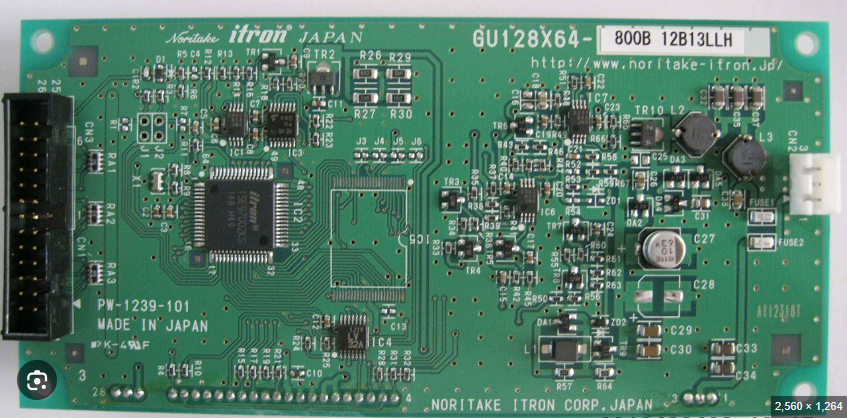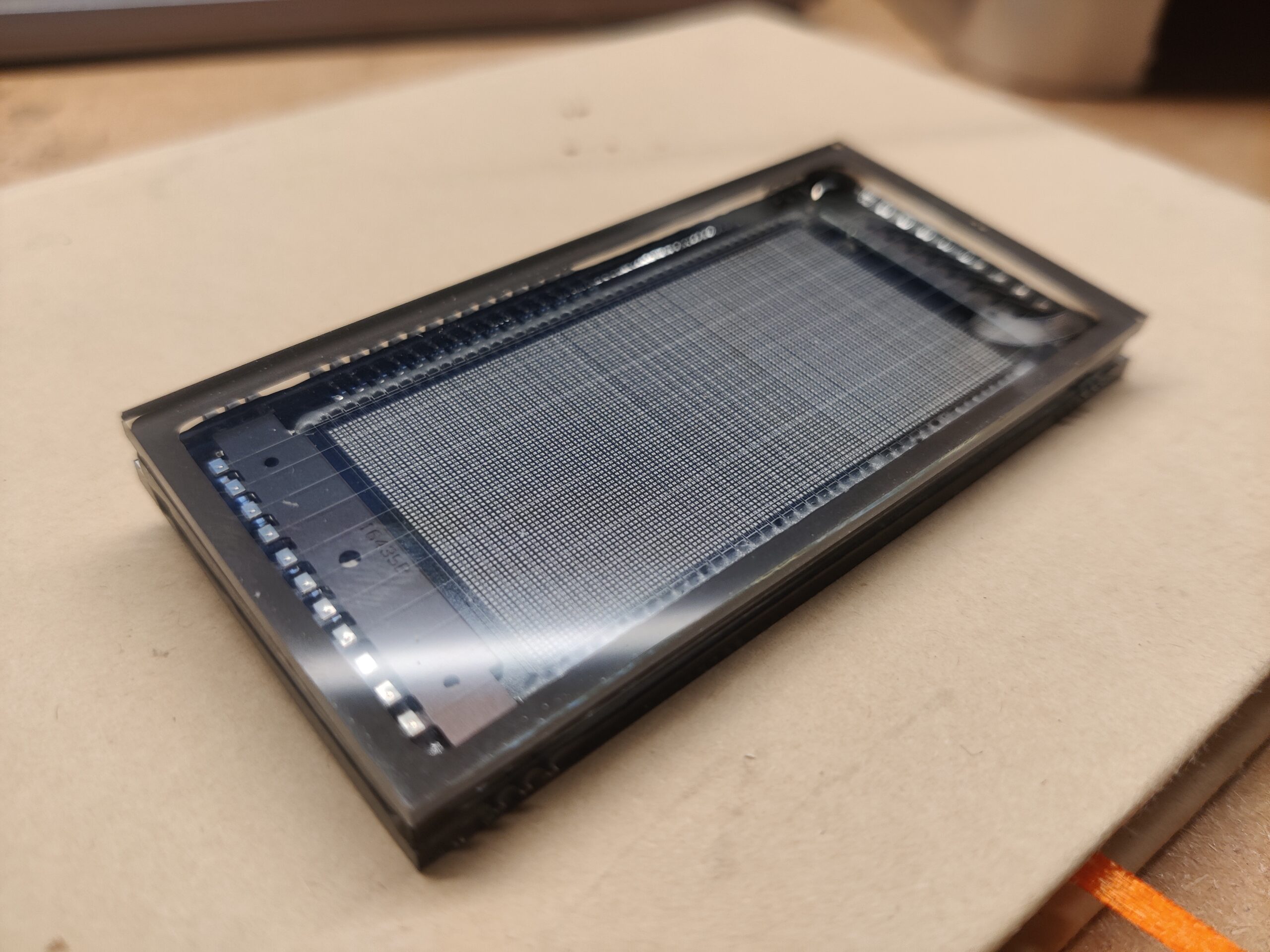

VFD – Vacuum Florescent Display. you might have come across them without thinking about it. Here in Sweden, they can typically be seen at checkout registers. giving off their signature, neon-like color.
Image

A little about VFDs
Vacuum fluorescent displays (VFDs) work similarly to cathode-ray tubes (CRTs): electrons are fired at phosphor-coated surfaces, causing the phosphor to glow when struck. In a CRT, the electrons travel through a vacuum tube and strike specific points on the screen, producing an image. In a VFD, the display is divided into discrete segments, and electrons are emitted from fine filaments stretched across these segments. Once common in consumer electronics, VFDs have largely fallen out of use, replaced by cheaper and more efficient display technologies.
Noritake MN12864K
I saw this clip on Youtube and instantly got captivated by the VFD aesthetic.
https://www.youtube.com/watch?v=gSgB5-2lPjA&ab_channel=RyoMukai
Ryo Mukai used a 256×128 VFD module by the Japanese company Noritake Itron to make this. To this day they offer a variety of VFD modules of different shapes and sizes.
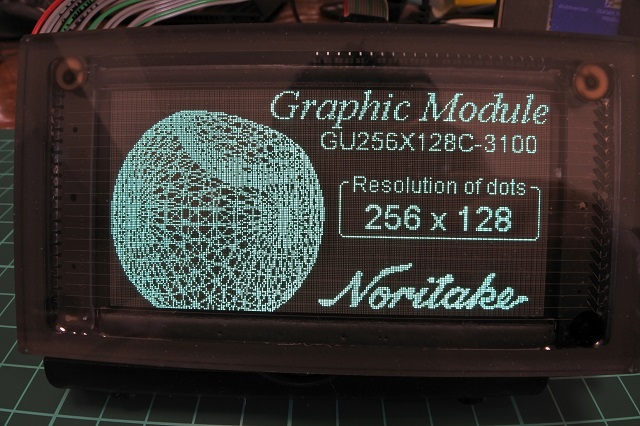
Destiny was telling me to make my 80s-tech retro dream GUI come true.
So without a minute to spare I browsed my typical electronics vendor sites and what did my eyes behold? 5000 kr for the same module Ryo was using in his video. Oh no.. Looking at sketchy ebay vendors, the price goes down to 1800 kr. A little better, but still not hobbyist-friendly.
My VFD thirst could not be quenched, so I continued looking for alternatives. My continued search eventually lead me to the MN12864K variant (also Noritake) but without a supporting driver PCB. Is it possible for me to make a driver PCB by myself?